Two numbers, two jobs
The FDA has required expiration dates on prescription and over-the-counter medicines since 1979. In its words, the date is central to judging whether a medicine can be used safely and will still do its job. It is printed on the label or stamped on the bottle or carton, sometimes after the letters “EXP” [1].
The lot number answers a different question: which batch did this unit come from? Recall notices name the affected lots, so the lot number is how you tell whether your own pen or vial is involved [2]. In the EU, product information also lists a batch number marked “Lot” among the particulars printed on both the outer carton and the pen label itself [8].
What the expiration date means
The FDA explains that expired medicines can become less effective or risky because their chemical make-up changes or their strength drops, and that some can grow bacteria. After that date nobody can promise the medicine still works safely, so the FDA’s advice is simply not to use it [1].
The date also assumes correct storage. The FDA notes that poor storage, such as a damp bathroom cabinet, can reduce a medicine’s effectiveness even before its expiration date [1]. For GLP-1 pens, the label’s storage section is the reference.
 Open larger screen
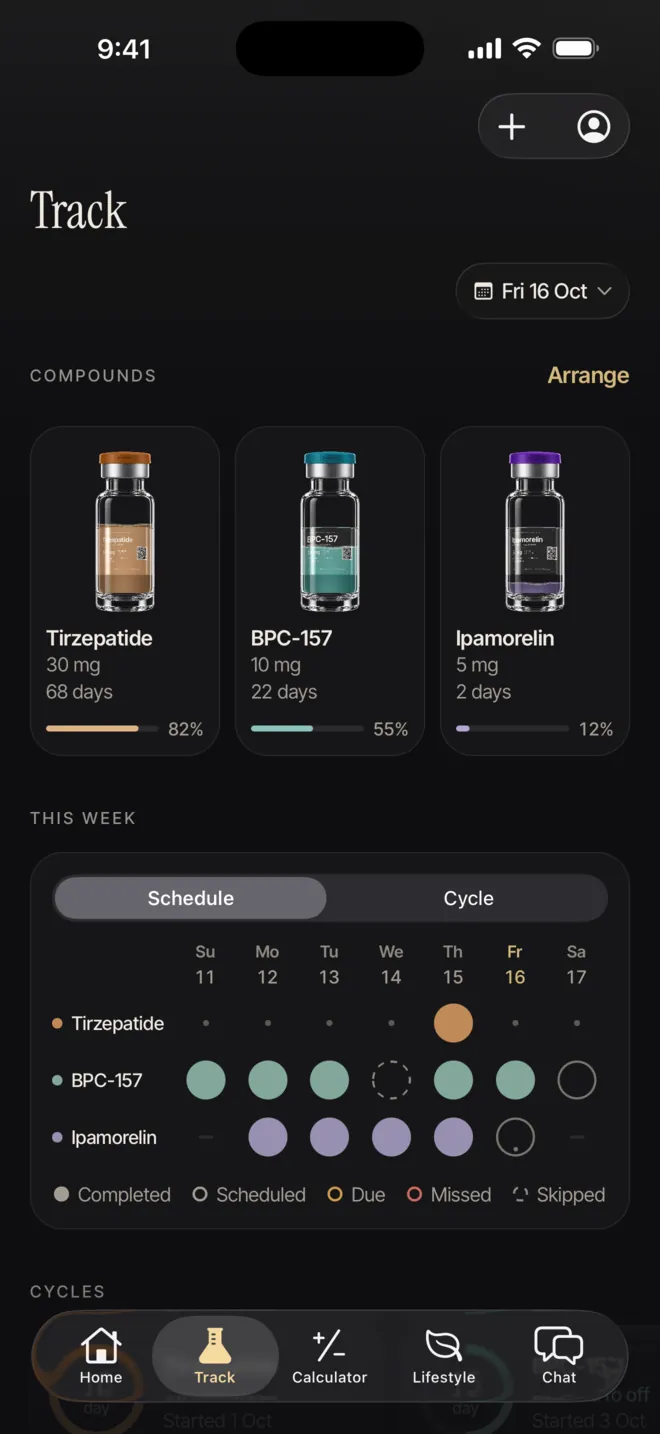
The shelf brings vials and schedules together.
Where to find them on a GLP-1 pen
- Ozempic®: the pen instructions show the expiration date (EXP) on the back of the pen label; the prefilled syringe instructions ask you to check the date on the label first [5].
- Wegovy®: the pen instructions also place the date on the back of the label and list a passed expiry date among the reasons not to use a pen [6].
- Mounjaro® in the EU: the labelling section of the product information prints “EXP” and “Lot” on the outer carton and on the single-dose pen label, and adds a 2D barcode carrying the unique identifier, with a product code and serial number in readable form [8].
- Any injectable: the MedlinePlus guide to subcutaneous injections asks you to check the label to confirm the medicine and dose, and the date to make sure it is not out of date [4].
The printed date and the in-use limit
Many pens and multi-dose vials have a second clock. The Ozempic® label says an unused pen can be used until the printed expiration date if it is kept in the refrigerator, but once the pen has been used for the first time, it can be kept for 56 days [5]. The Wegovy® FlexTouch® pen has the same 56 days after first use [6].
The Mounjaro® label works the same way for its multi-dose vial and KwikPen: until the expiration date if unopened and refrigerated, and then discard 30 days after first use or after 4 weekly doses, even if medicine is left [7]. Single-dose pens carry a different limit, the total time they may spend unrefrigerated before use. Either limit can end long before the printed date, and our pen storage article lists them product by product.
Compounded vials are a separate case. For multi-dose vials of compounded GLP-1 medicines, the FDA advises discarding the vial 28 days after first use, even if medicine remains and even if the compounder’s instructions allow longer [10].
What the lot number is for
The FDA’s guidance on recalls is direct: if your medicine has been recalled, compare the lot number on your package with the lot number in the recall notice. Recalls are classified by risk, from class I, the most serious, to class III, where health effects are unlikely, for example an incorrect expiration date [2].
For class I recalls, the FDA asks patients to follow the recalling company’s instructions. For class II and III recalls, people can generally keep using the medicine unless told otherwise, because stopping can sometimes be more harmful than continuing [2]. The FDA also notes that not every recall is announced in the news, and keeps a public database of recalled medicines [2]. If you are unsure, ask your pharmacist or prescriber.
Lot numbers in counterfeit notices
The FDA’s notices about counterfeit Ozempic® show how a lot number is used in practice, and its limits. In December 2023 the agency named a lot number and a serial number to check; in April 2025 a lot number together with the first eight digits of the serial number [9].
The December 2025 update was different. The counterfeit pens carried lot PAR1229, which is also a genuine lot, so the FDA described the label layout instead: on the fake pens the EXP/LOT text sits to the left of the date and lot number, on authentic pens above them [9]. The lesson for a log is that the lot number is a starting point, not proof. Our article on counterfeit GLP-1 medicines covers the other warning signs.
Why reports ask for both
The FDA’s consumer reporting form, Form 3500B, asks for the expiration date, lot number, NDC number and strength printed on the package. It also suggests including photos of all sides of the product and keeping it, without sending it to the FDA, in case more information is needed [3].
A lot number written down on the day you open a pen or vial saves a search through the bin later. Our MedWatch article walks through the rest of the form.
Disposing of expired medicine
For expired or unwanted medicines, the FDA first points you to the label’s own disposal instructions. A drug take-back location or a prepaid mail-back envelope is its preferred option; if neither is available, it explains when a medicine may be flushed and how to discard it in household trash [1].
Pens and needles are sharps. The FDA describes two steps: put them in a sharps disposal container straight after use, then get rid of the container, once about three-quarters full, according to your community’s rules [11]. Our article on sharps disposal covers containers and local options.
Ozempic® and Wegovy® are registered trademarks of Novo Nordisk A/S. Mounjaro® is a registered trademark of Eli Lilly and Company. PepLabo is not affiliated with or endorsed by Novo Nordisk or Eli Lilly and Company.
When to get help
The signs and contact information below come from this article’s sourced guidance.
Today
- A class I recall names the lot number on your pen or vial
Contact: Follow the recalling company’s instructions and call your pharmacist
FDA, Understanding Drug Recalls [2]
- Your pen matches the description in a counterfeit notice, or its label looks different from your usual pens
Contact: Do not use it; contact your pharmacist
FDA counterfeit Ozempic® notice [9]
- You injected from an expired, counterfeit-looking or warm-delivered product and now feel unwell
Contact: Your healthcare provider